Tag: French for Canadian immigration

  • Learning French: Similarities and Differences Between English and French Explained

    Learning French: Similarities and Differences Between English and French Explained

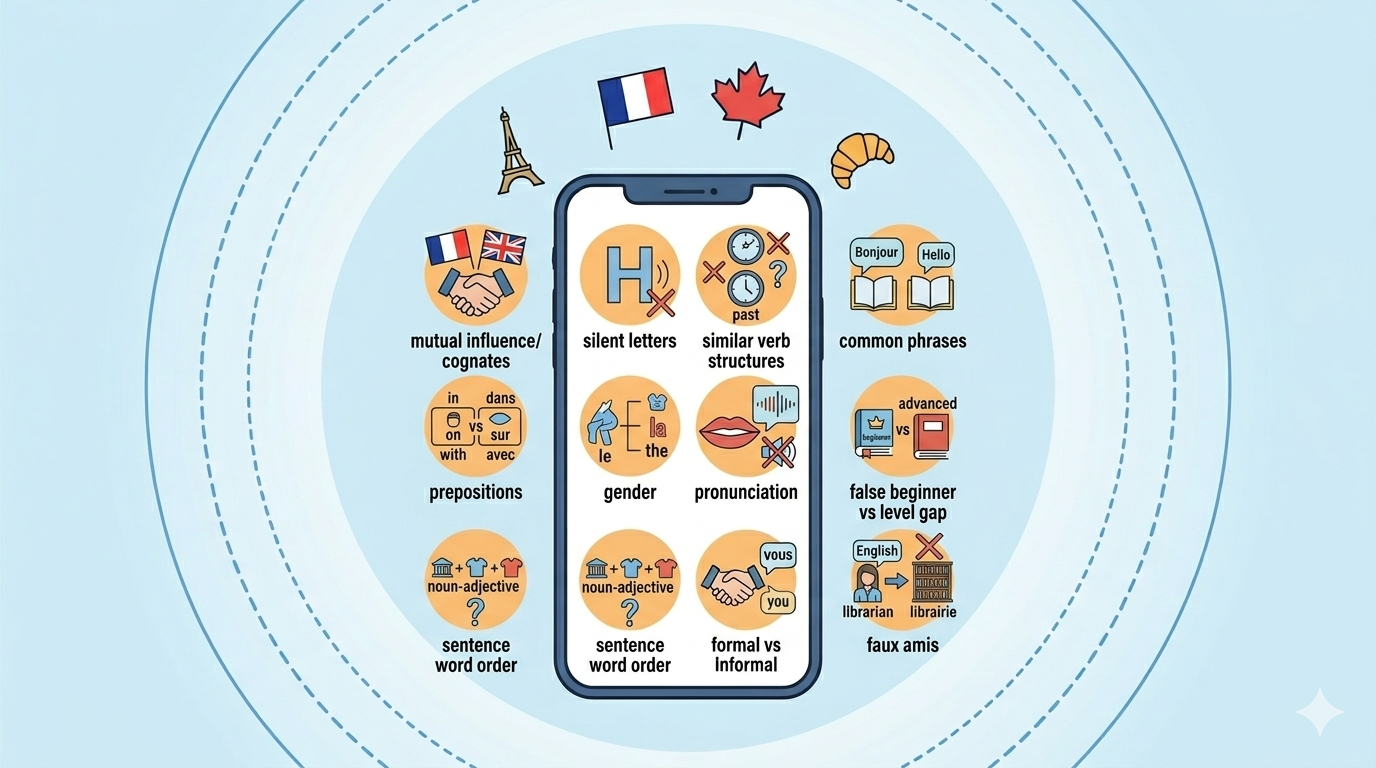
    Learning French can feel much easier once you understand how closely connected English and French actually are. These two languages share centuries of historical interaction, thousands of similar words, and many cultural influences. At the same time, they differ in grammar, pronunciation, and communication style.

    For English speakers, recognizing these similarities and differences is one of the most powerful ways to accelerate language progress. In this comprehensive guide, we will explore how English and French evolved together, where they overlap, and where learners must adapt their thinking to truly master French.

    If you are starting your language journey, structured programs such as those available through PrepFrench Classes can help you understand these patterns more quickly and avoid common beginner mistakes.

    Tip: Understanding how English and French connect historically can significantly simplify vocabulary learning. Many words already exist in both languages with similar meanings.

    Table of Contents

    • Historical Connections Between English and French
    • Vocabulary Similarities and Cognates
    • Major Grammar Differences
    • Pronunciation Differences
    • Cultural Influences in Language
    • Practical Tips for English Speakers Learning French
    • FAQ

    Historical Connections Between English and French

    Understanding the historical relationship between English and French provides valuable insight when learning French. One of the most influential events shaping both languages was the Norman Conquest of England in 1066.

    After the conquest, French became the language of the English aristocracy and administration for several centuries. As a result, thousands of French words entered English vocabulary.

    Today, linguists estimate that roughly 30% of English vocabulary originates from French. Words related to law, governance, cuisine, and art frequently come from French origins.

    For deeper linguistic research on language development and frameworks, you can explore resources from the official CEFR language framework.

    During the Renaissance and later global expansion, English also influenced French in return. This mutual exchange means modern learners often recognize familiar patterns across both languages.

    Want Structured Guidance for Learning French?

    Our instructors help students understand grammar, vocabulary, and pronunciation step-by-step.

    Book Free Demo

    Explore Courses

    Vocabulary Similarities That Make Learning French Easier

    One of the biggest advantages English speakers have when learning French is the presence of cognates. Cognates are words that look similar and share similar meanings in both languages.

    Examples include:

    English French Meaning
    Restaurant Restaurant Dining place
    Artist Artiste Creative professional
    Justice Justice Legal fairness
    Culture Culture Societal traditions

    These shared words help learners quickly build vocabulary confidence. However, it is important to watch for false friends — words that appear similar but carry different meanings.

    For example:

    • Actuellement means “currently”, not “actually”.
    • Library translates to bibliothèque, not librairie.

    Understanding these distinctions is essential for effective communication while learning French.

    Grammar Differences Between English and French

    Despite vocabulary similarities, grammar differences can challenge English speakers when learning French. These differences require careful practice and exposure.

    Gendered Nouns

    Unlike English, French nouns are assigned grammatical gender.

    Examples:

    • le livre (the book – masculine)
    • la table (the table – feminine)

    Adjectives and articles must agree with the noun’s gender, which adds an extra layer of complexity.

    Verb Conjugation

    French verbs change depending on the subject and tense. For example:

    • Je parle
    • Tu parles
    • Nous parlons

    English verbs change less frequently, which is why conjugation may feel unfamiliar to new learners.

    Official explanations of language proficiency standards can be explored through resources such as France Éducation International.

    Study Tip: Instead of memorizing grammar tables alone, practice using verbs in real sentences and conversations.

    Pronunciation Differences When Learning French

    Pronunciation is one of the biggest hurdles when learning French. French includes several sounds that do not exist in English.

    Common pronunciation challenges include:

    • Nasal vowels (an, on, in)
    • The French “r” sound
    • Silent final consonants
    • Liaison between words

    Listening practice is essential. Educational research published through organizations such as OECD education studies emphasizes the importance of audio exposure when acquiring new languages.

    Consistent listening to native speech gradually trains your ear to identify these subtle sound differences.

    Improve Your Pronunciation with Expert Guidance

    Practice speaking with instructors who correct pronunciation and build confidence.

    Book Free Demo

    TCF Preparation | TEF Preparation

    Cultural Differences Reflected in Language

    Language reflects cultural values. When learning French, understanding cultural norms can help you communicate more naturally.

    One important example is the distinction between:

    • Tu – informal “you”
    • Vous – formal or plural “you”

    Using the wrong form can sometimes sound impolite. French culture tends to place strong emphasis on politeness and formality.

    Global cultural research conducted by institutions such as UNESCO cultural initiatives highlights how language structures often mirror societal values.

    By understanding cultural context, learners develop not only linguistic accuracy but also social awareness.

    Practical Tips for English Speakers Learning French

    To accelerate progress while learning French, consider these proven strategies:

    • Practice speaking daily
    • Watch French films or listen to podcasts
    • Learn phrases instead of isolated words
    • Review vocabulary consistently
    • Join structured language classes

    If your goal includes official certification or immigration pathways, structured preparation programs can significantly improve success rates.

    Explore training options through professional language programs designed for beginners and advanced learners.

    Conclusion

    Understanding the similarities and differences between English and French provides a powerful advantage when learning French. Shared vocabulary makes the language accessible, while grammar and pronunciation differences present stimulating challenges.

    With consistent practice, cultural awareness, and the right learning environment, English speakers can achieve fluency far more efficiently than they might expect.

    The key is to stay curious, practice regularly, and embrace both the similarities and the differences that make the French language so fascinating.

    Start Your French Learning Journey Today

    Join live online classes, structured lessons, and expert guidance.

    Book Free Demo

    Frequently Asked Questions

    What makes French easier for English speakers?

    Thousands of shared vocabulary words and historical connections make French more accessible to English speakers than many other languages.

    What is the biggest grammar difference between English and French?

    The system of gendered nouns and verb conjugations are two of the biggest grammar differences.

    Is French pronunciation difficult?

    French pronunciation includes nasal vowels and silent letters that require practice but become easier with listening exposure.

    How long does it take to learn French?

    With consistent study and practice, conversational proficiency often develops within 12–24 months.

    Can I learn French online?

    Yes. Online classes, speaking practice, and multimedia resources allow learners to develop strong language skills from anywhere.

  • 11 Common Mistakes to Avoid When Learning French

    11 Common Mistakes to Avoid When Learning French

    Learning French is one of the most rewarding intellectual and cultural journeys you can begin. Whether your goal is travel, immigration, career advancement, or simply personal enrichment, French opens doors to a global community of more than 300 million speakers. Yet despite its beauty, many learners struggle because they unknowingly repeat the same mistakes during the early stages of study.

    By understanding these challenges in advance, you can accelerate your progress and develop a more natural command of the language. In this guide, we will explore 11 of the most common mistakes learners make when studying French and provide practical strategies to overcome them. If you are serious about building real fluency, avoiding these pitfalls can dramatically improve your results.

    Quick Tip: A structured learning environment dramatically improves progress. Explore professional programs and structured lessons through our available programs designed for beginners and advanced learners alike.

    Table of Contents

    • Why Learning French Feels Challenging
    • 11 Common Mistakes Learners Make
    • How to Study French More Effectively
    • Practical Tips for Faster Progress
    • FAQ

    Why Learning French Feels Challenging

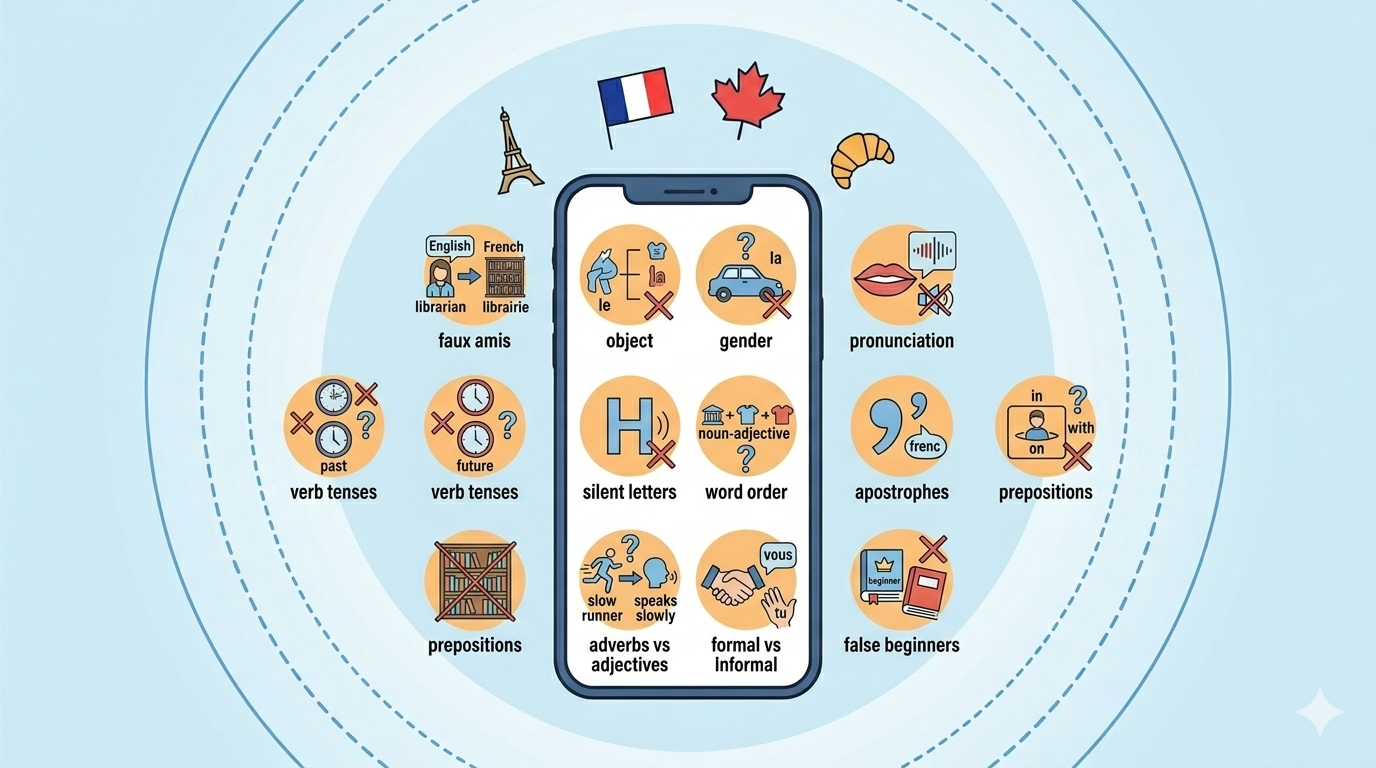
    Before discussing mistakes, it is helpful to understand why learning French can feel difficult for many students. French pronunciation, grammar structures, and verb conjugations differ significantly from English. For example, nasal vowels such as on, an, and in have no direct equivalent in English.

    Additionally, French grammar includes gendered nouns, agreement rules, and multiple verb tenses. These features make the language intellectually rich but sometimes confusing for beginners.

    According to the official CEFR language framework, mastering a new language requires developing competence in listening, reading, writing, and speaking simultaneously. Learners who focus too heavily on one skill often struggle with overall fluency.

    Fortunately, once you recognize common learning pitfalls, you can adopt strategies that accelerate your progress and make the experience far more enjoyable.

    Start Your French Journey the Right Way

    Join structured lessons with experienced instructors and interactive exercises designed to build real fluency.

    Book Free Demo

    TCF Preparation Program | TEF Preparation Program

    11 Common Mistakes to Avoid When Learning French

    1. Focusing Too Much on Grammar

    One of the biggest mistakes people make when learning French is obsessing over grammar rules. Grammar is important, but language exists to communicate. If you constantly worry about making mistakes, you may avoid speaking altogether.

    Instead, combine grammar study with conversation practice. Real communication helps reinforce grammatical structures naturally.

    2. Ignoring Pronunciation Early

    French pronunciation is extremely important. Small differences can completely change meaning. For instance, beaucoup and beau coup sound similar but differ in meaning.

    Pronunciation practice using phonetic exercises is essential. Many learners benefit from listening to native audio resources provided by institutions such as France Éducation International.

    3. Relying Only on Textbooks

    Textbooks are helpful, but they rarely reflect natural conversation. Real language includes slang, idioms, and cultural context.

    Supplement textbooks with French films, podcasts, and authentic materials. Listening to real speech improves comprehension significantly.

    4. Avoiding Conversation Practice

    Speaking is the most important skill when learning French, yet it is often neglected. Without conversation, vocabulary remains passive knowledge.

    Practice regularly with tutors, language partners, or online conversation groups. Studies from the OECD education research show that interactive learning dramatically increases language retention.

    5. Translating Everything in Your Head

    Many learners mentally translate every sentence from English to French. This habit slows down speaking and makes conversations stressful.

    Instead, try to think directly in French by associating words with images or actions rather than translations.

    6. Ignoring Cultural Context

    Language and culture are deeply connected. Understanding French culture helps you interpret expressions and communication styles.

    Resources from organizations such as UNESCO cultural programs highlight how cultural exposure improves language learning outcomes.

    7. Memorizing Without Context

    Vocabulary lists alone rarely lead to fluency. Words are easier to remember when learned within sentences or stories.

    For example, instead of memorizing manger, practice full sentences like: Je mange une pomme.

    8. Skipping Listening Practice

    Listening comprehension is essential when learning French. Native speech can initially sound fast and unclear.

    Use podcasts, interviews, and educational videos to train your ear. Over time, patterns become easier to recognize.

    9. Studying Inconsistently

    Consistency matters more than intensity. Studying for 15 minutes daily is often more effective than several hours once a week.

    Create a realistic study schedule that fits your lifestyle.

    10. Not Setting Clear Goals

    Clear objectives help maintain motivation. For example:

    • Passing an official language exam
    • Holding a 10-minute conversation
    • Reading French articles comfortably

    Official tests such as those explained on the CCI Paris official page measure language proficiency across multiple skills.

    11. Trying to Learn Alone Without Guidance

    While self-study is useful, structured instruction dramatically improves results. Teachers provide feedback, pronunciation correction, and accountability.

    Professional programs available at PrepFrench Classes combine grammar, speaking practice, and exam preparation for a balanced learning experience.

    Ready to Improve Your French Faster?

    Our instructors help students avoid common mistakes and build real conversational fluency.

    Book Free Demo

    View All Courses

    Practical Tips for Learning French Faster

    Avoiding mistakes is only part of the journey. Here are practical strategies that help accelerate progress while learning French.

    Strategy Benefit
    Daily listening practice Improves comprehension and pronunciation
    Speaking with tutors Builds real communication confidence
    Learning phrases instead of single words Speeds up conversational fluency
    Cultural immersion Improves understanding of real-life communication
    Tip: If your goal involves immigration or professional certification, structured preparation programs can help you reach the required language levels efficiently.

    Conclusion

    Mastering a language requires patience, consistency, and the right strategy. By recognizing these common mistakes early, you can approach learning French with a smarter and more effective study plan.

    Focus on balanced learning: combine grammar, pronunciation, listening, and conversation practice. Engage with authentic cultural content and maintain a regular study schedule.

    With the right guidance and dedication, achieving French fluency is absolutely possible.

    Start Speaking French with Confidence

    Join live classes, structured lessons, and expert guidance designed for real-world fluency.

    Book Free Demo

    Frequently Asked Questions

    What is the biggest challenge when learning French?

    Pronunciation and verb conjugation are often the biggest challenges, especially for beginners.

    How long does it take to become fluent in French?

    It depends on study intensity, but consistent learners often reach conversational fluency within 12–24 months.

    What is the best way to practice speaking French?

    Practice with tutors, conversation groups, or structured language classes.

    Can I learn French without living in a French-speaking country?

    Yes. Online lessons, media exposure, and speaking practice allow learners to develop strong fluency remotely.

    Are official French exams necessary?

    They are not required for everyone, but certifications can be helpful for immigration, university admission, or employment.

  • Ultimate Guide to DELF and DALF Exams: Your Pathway to French Proficiency Certification

    Ultimate Guide to DELF and DALF Exams: Your Pathway to French Proficiency Certification

    Ultimate Guide to DELF & DALF Exams: Your Pathway to French Proficiency Certification

    If you want a globally recognized French certification for studies, career growth, or personal achievement, the DELF and DALF exams are among the most respected options available. These official diplomas validate your French level according to the CEFR framework (A1 to C2), and they can strengthen your academic applications, CV, and confidence in real-world French communication.

    In this comprehensive guide, you will learn what DELF and DALF are, how the exams are structured, who should take which level, how scoring works, how to prepare effectively, and how to register smartly. We’ll also clarify an important point for Canadian learners: DELF/DALF are excellent French certifications, but for Canadian Express Entry immigration language proof, candidates generally need TEF Canada or TCF Canada.

    If you are exploring French learning pathways, you can also browse PrepFrench Classes or view all French courses to find the right level for your goals.

    What You’ll Learn in This Guide

    • What DELF and DALF mean and who issues them
    • DELF vs DALF levels (A1 to C2) and CEFR alignment
    • Exam format: listening, reading, writing, speaking
    • Scoring, pass criteria, and level expectations
    • Preparation strategies and study resources
    • Registration tips and exam-day checklist
    • How DELF/DALF compare with TEF/TCF for Canada-related goals

    What Are DELF and DALF Exams?

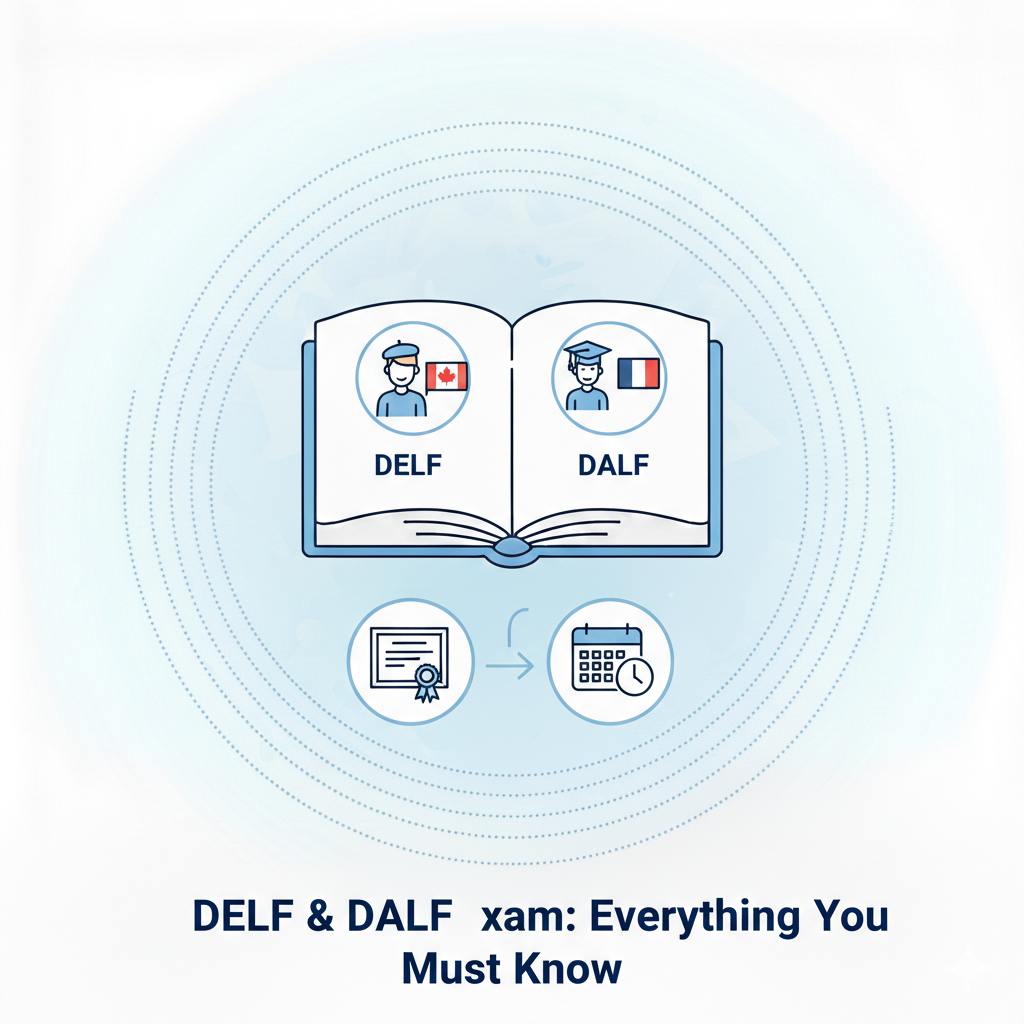
    DELF stands for Diplôme d’Études en Langue Française, and DALF stands for Diplôme Approfondi de Langue Française. These are official French language diplomas issued by the French Ministry of National Education and administered through the France Éducation international network.

    DELF and DALF are aligned with the Common European Framework of Reference for Languages (CEFR), which organizes language proficiency into six levels: A1, A2, B1, B2, C1, and C2. This alignment makes the certifications easy to understand across schools, universities, and employers around the world.

    One major advantage is that DELF/DALF diplomas are recognized internationally and are valid for life. This makes them a strong long-term credential for learners who want to document their French skills permanently rather than relying only on short-validity test results.

    Official references: DELF tout public (France Éducation international), DALF (France Éducation international), and CEFR level descriptions (Council of Europe).

    DELF vs DALF: Levels and Who Should Take Them

    The easiest way to understand the difference is this:

    • DELF = beginner to upper-intermediate levels (A1 to B2)
    • DALF = advanced levels (C1 and C2)

    DELF Levels (A1–B2)

    DELF A1 is ideal for complete beginners who are learning everyday phrases, introductions, and simple interactions. DELF A2 builds routine communication, common vocabulary, and basic independent functioning in familiar situations. DELF B1 is a major milestone because you begin expressing opinions, narrating experiences, and managing common social/professional conversations. DELF B2 is often considered the level where you can interact more naturally with native speakers and handle structured argumentation.

    DALF Levels (C1–C2)

    DALF C1 is for advanced users who can understand complex texts, produce well-structured arguments, and communicate effectively in academic or professional settings. DALF C2 reflects very high proficiency, including the ability to synthesize information and communicate with strong precision and fluency.

    Important note for learners: DELF and DALF levels are independent diplomas, which means you do not necessarily need to pass every prior level in sequence. However, most learners progress more smoothly with structured preparation aligned to their real level.

    If you are not sure where to begin, start with a structured level assessment and explore PrepFrench course options for beginner, intermediate, advanced, and exam-focused pathways.

    DELF & DALF Exam Structure: What Skills Are Tested?

    Both DELF and DALF evaluate the four core language competencies that matter in real communication:

    • Listening comprehension (understanding spoken French)
    • Reading comprehension (understanding written French)
    • Written production (writing clearly and appropriately)
    • Oral production (speaking and interaction)

    Although the exact task types and difficulty vary by level, the overall purpose stays consistent: the exam is designed to measure how well you can use French in real-life contexts, not just memorize isolated grammar rules.

    1) Listening (Compréhension orale)

    In the listening section, you may hear announcements, conversations, interviews, or other audio materials. At lower levels, the speech is more controlled and context-based. At higher levels (especially B2/C1/C2), you must identify key ideas, tone, nuance, and argument flow. This is why listening practice with authentic audio is essential.

    2) Reading (Compréhension écrite)

    Reading tasks may include short notices, emails, articles, or longer texts depending on the level. Your job is not just to “translate words,” but to understand meaning, intention, and structure. Advanced levels expect stronger inference skills and the ability to process more complex material.

    3) Writing (Production écrite)

    Writing tasks become progressively more demanding across levels. Beginners may complete shorter structured tasks, while B2 and above often require argumentation, organization of ideas, and register control. Good writing performance depends on clarity, coherence, grammar accuracy, vocabulary range, and task completion.

    4) Speaking (Production orale)

    The speaking exam evaluates how well you can communicate, interact, and organize your ideas orally. This includes pronunciation, fluency, grammar control, vocabulary, and your ability to respond appropriately to prompts or questions. At higher levels, the ability to present and defend ideas becomes increasingly important.

    If you want to see real task examples and evaluation grids, France Éducation international publishes sample materials, including DELF B2 examples and criteria: Official DELF B2 sample subjects and evaluation grids.

    Scoring and Passing Criteria: How DELF/DALF Results Work

    DELF and DALF exams are known for being structured and transparent. In general, the exam is divided across the four skills, and each skill is scored separately. A common principle used in DELF/DALF exams is:

    • Each skill is scored out of 25
    • Total score is out of 100
    • You typically need at least 50/100 to pass
    • You must not score below the minimum threshold in any single skill (for many levels, a score under 5/25 is eliminatory)

    This scoring logic matters because a very strong score in one section cannot fully compensate for a severely weak section. In other words, balanced preparation is the key to certification success.

    At advanced levels like DALF C1, candidates also need stronger control over discourse structure, argumentation, synthesis, and register. If your goal is DALF C1 or C2, your preparation must include formal speaking and writing practice—not just grammar drills.

    Many learners lose points not because they “don’t know French,” but because they:

    • misread instructions,
    • write off-topic responses,
    • use weak structure, or
    • run out of time before completing all tasks.

    This is exactly why exam-oriented coaching, timed practice, and correction feedback can make a major difference.

    Why DELF/DALF Certification Matters for Students and Professionals

    1) Academic Admissions and Study Abroad

    DELF and DALF can strengthen applications to French-speaking institutions, especially when programs require proof of French proficiency. In practice, many universities and schools evaluate language level expectations differently depending on the program, but certifications like DELF B2 or DALF C1 are widely recognized and respected. If you plan to study in France, review requirements directly from the institution and official student guidance sources such as Campus France’s guidance on French requirements.

    2) Career and CV Value

    Employers value verifiable language skills. A DELF or DALF diploma shows that your French proficiency has been formally assessed using internationally understood benchmarks. Whether you work in education, hospitality, customer service, diplomacy, international trade, or multicultural teams, this certification can make your profile stronger and more credible.

    3) Personal Achievement and Confidence

    Beyond career and academics, a French certification is a powerful personal milestone. It gives learners a concrete goal, a structured study plan, and a confidence boost after months of disciplined work. Passing a DELF or DALF level often becomes the turning point where learners move from “studying French” to actually using French confidently.

    Important Canada Note: DELF/DALF vs TEF/TCF for Immigration

    This is a common point of confusion, so let’s make it clear: DELF and DALF are excellent French certifications for academic, professional, and personal purposes. However, for many Canadian immigration pathways (such as Express Entry language proof), IRCC officially lists accepted tests like TEF Canada and TCF Canada for French.

    So if your goal is Canada PR, Express Entry, CRS improvement, or French category draws, you should prepare for the correct immigration exam format. You can explore these dedicated prep options here:

    How to Prepare for DELF & DALF Exams Effectively (Step-by-Step)

    The most successful learners do not prepare randomly. They follow a structured plan that balances the four skills and targets the exact level requirements. Here is a practical framework you can use:

    Step 1: Confirm Your Current Level

    Before buying books or registering for an exam, determine your actual level. Many learners overestimate or underestimate themselves. A placement test and teacher feedback can save months of frustration.

    Step 2: Understand the Exam Format

    Study the structure of your chosen level and review official examples. This helps you understand question styles, time pressure, and evaluation expectations. Knowing the format reduces anxiety and improves performance on test day.

    Step 3: Build a Weekly Study Routine

    A realistic weekly plan is more effective than occasional long study sessions. For example:

    • 2 days: listening + vocabulary
    • 2 days: grammar + reading
    • 2 days: writing + correction
    • 1 day: speaking practice + mock review

    If you are preparing for B2 or C1, you should also include timed writing and speaking simulations every week.

    Step 4: Practice Active French, Not Passive French

    Watching French videos is useful, but it is not enough by itself. You need active production: speaking aloud, writing essays, summarizing audio, and answering questions under time limits. Exams reward communication ability, not just recognition.

    Step 5: Get Feedback and Corrections

    Writing and speaking are the two areas where learners progress fastest with feedback. A teacher can quickly identify recurring mistakes in grammar, structure, register, and pronunciation that self-study often misses.

    At PrepFrench Classes, structured coaching, mock practice, and guided corrections help learners prepare more strategically rather than guessing what to study next.

    Best Resources for DELF/DALF Preparation (Official + Practical)

    To prepare well, combine official exam resources with consistent practice tools. Here are some useful categories:

    Official Sources (Must Use)

    CEFR Reference

    Practice Support (Listening, Vocabulary, Exposure)

    • French podcasts and radio for listening speed and comprehension
    • Short articles and news summaries for reading practice
    • Timed writing prompts for task completion and structure
    • Conversation practice or oral mock sessions for speaking confidence

    The key is not using “many resources,” but using the right resources consistently for your target level.

    Registration Process and Exam Logistics: What to Expect

    Registration procedures for DELF/DALF vary by country and exam center, so always verify details with an official or authorized center in your region. Still, the overall process usually looks like this:

    1. Choose your exam and level (DELF A1–B2 or DALF C1–C2).
    2. Find an approved exam center and check available sessions.
    3. Register before the deadline (seats can fill quickly in popular sessions).
    4. Pay the exam fee (fees differ by level and country).
    5. Review your confirmation details carefully (name spelling, exam date, center instructions).
    6. Prepare required ID documents and arrive early on exam day.

    Pro tip: Do not wait to “feel 100% ready” before planning your exam date. A realistic target date often improves consistency and gives your preparation a clear direction.

    Common Mistakes to Avoid in DELF/DALF Preparation

    • Ignoring speaking practice: Many learners study grammar heavily but rarely speak under exam conditions.
    • Over-focusing on apps only: Apps are useful, but they usually don’t replace writing correction and oral feedback.
    • Not practicing timed tasks: Strong language skills can still underperform without time management practice.
    • Skipping evaluation criteria: Knowing how examiners assess writing/speaking helps you earn more points.
    • Choosing the wrong level: Taking a level that is too high too soon increases stress and lowers pass chances.
    • Memorizing templates blindly: Templates help, but flexible communication and task relevance matter more.

    A balanced plan with mock tests, corrections, and level-specific strategy is the fastest path to a confident result.

    Ready to Prepare for French Certification the Right Way?

    Whether you are targeting DELF A1/A2, DELF B1/B2, DALF C1/C2, or a Canada-focused French exam like TEF Canada / TCF Canada, structured guidance can save you months of confusion and help you improve faster.

    Book a free demo class with PrepFrench and get a personalized roadmap based on your level, timeline, and goal.

    Start here: www.prepfrenchclass.com

    Frequently Asked Questions (FAQ)

    1) What is the difference between DELF and DALF?

    DELF covers A1 to B2 levels (beginner to upper-intermediate), while DALF covers C1 and C2 (advanced/proficient levels). Both are official French diplomas aligned with CEFR and recognized internationally.

    2) Are DELF and DALF certificates valid for life?

    Yes. DELF and DALF diplomas are generally valid for life, which makes them strong long-term credentials for education and career use.

    3) Can DELF/DALF be used for Canadian Express Entry?

    DELF/DALF are valuable French certifications, but for Canadian Express Entry language proof, IRCC typically requires approved French tests like TEF Canada or TCF Canada. If your goal is Canada PR, prepare for the correct exam format.

    4) How long does it take to prepare for DELF or DALF?

    It depends on your current level, target level, and weekly study consistency. A learner moving from beginner to DELF B1/B2 may need several months of structured practice. Advanced targets like DALF C1/C2 usually require more focused writing and speaking preparation.

    5) What is the best way to prepare for DELF/DALF?

    The best approach combines official sample materials, level-specific practice, timed mock tests, and teacher feedback for writing and speaking. Structured coaching helps reduce mistakes and improves exam readiness faster.

    Final Thoughts

    DELF and DALF are among the most respected pathways to proving your French proficiency. Whether your goal is academic growth, professional advancement, or personal achievement, these certifications provide a clear and internationally recognized benchmark for your skills.

    The key to success is simple: choose the right level, prepare strategically, and practice consistently across all four skills. If you want expert guidance, mock practice, and a structured roadmap, explore PrepFrench Classes and book a free demo session today.

  • Unlocking Opportunities: The Top 9 Benefits of Mastering the French Language

    Unlocking Opportunities: The Top 9 Benefits of Mastering the French Language

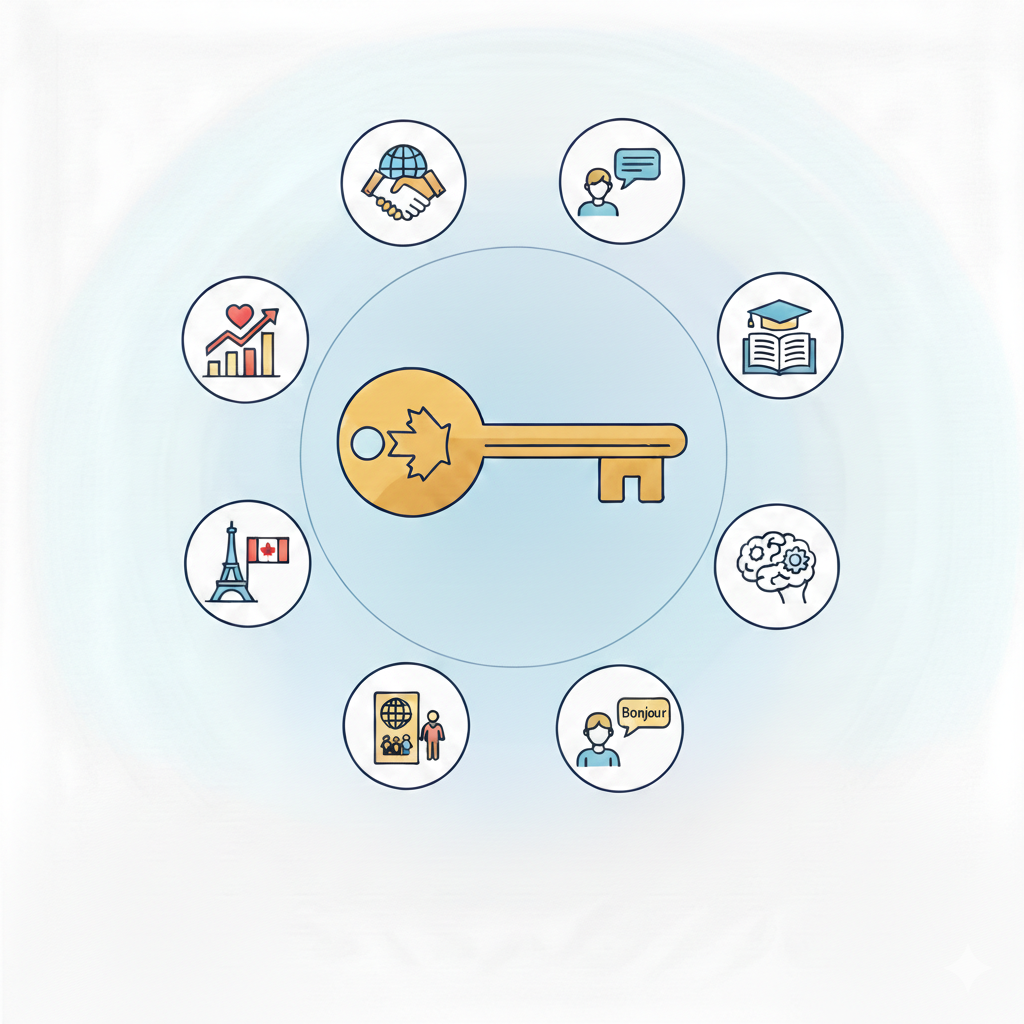
    In today’s interconnected world, learning a new language is much more than an academic achievement. It is a practical skill that can improve your career options, travel experiences, cultural understanding, and confidence. Among the most valuable global languages, French stands out because of its international presence across education, diplomacy, business, culture, and immigration pathways.

    French is used across multiple continents and is also one of the official languages of major international institutions, including the United Nations. This makes French a highly relevant language for students, professionals, newcomers, and globally minded learners. (UN Official Languages)

    Whether your goal is to improve your professional profile, prepare for TEF Canada / TCF Canada, travel more confidently, or simply challenge yourself with a meaningful new skill, mastering French can open doors in ways many learners do not expect.

    At PrepFrench Classes, we help learners build French skills for real-life outcomes through structured learning pathways, live instruction, and goal-based support.

    In this article, we explore the top 9 benefits of mastering French and how PrepFrench can support your journey.

    Thinking about learning French but not sure where to start?

    Book a FREE demo class / consultation with PrepFrench Classes and get a personalized learning plan based on your goal (career, travel, exam prep, immigration, or fluency).

    Book Free Demo

    Why French Matters Globally in 2026

    Before we dive into the 9 benefits, it helps to understand why French remains such a strategic language. French is used in many regions across Europe, Africa, North America, and beyond, and it is supported by a wide global Francophone community. (OIF – The Francophonie in Brief)

    It is also a language closely tied to diplomacy, education, global mobility, arts, and cultural exchange. That means learning French can create value in both practical and personal areas of life.

    If you want a structured path instead of random self-study, explore our full learning options here: PrepFrench Courses.

    1) Expand Career Opportunities with French

    One of the strongest benefits of mastering French is the impact it can have on your career. In a globalized economy, employers value professionals who can communicate with clients, partners, and teams across language and cultural boundaries.

    French can be particularly helpful in industries such as:

    • Tourism and hospitality
    • International business and sales
    • Education and training
    • Government and public service
    • NGOs and international development
    • Customer support and multilingual operations

    In Canada, French can also be especially valuable for bilingual roles in public service and many customer-facing or administrative positions. (Canada Public Service – Bilingual Positions FAQs)

    Even when a role does not explicitly require French, the skill can make your profile stand out by signaling adaptability, discipline, and international communication ability.

    At PrepFrench, we help learners build practical French that supports real goals, not just textbook exercises. Visit our Home Page to learn more about our approach.

    2) Improve Your Earning Potential and Professional Value

    While salary outcomes always depend on industry, location, and role, multilingual professionals are often viewed as more versatile and valuable in organizations that serve diverse markets. French can improve your ability to contribute in cross-border communication, client support, and team collaboration.

    This can translate into benefits such as:

    • Access to a wider range of roles
    • Eligibility for bilingual or multilingual positions
    • Stronger client-facing or leadership opportunities
    • Better competitiveness in international environments

    The key point is not just “knowing French,” but being able to use French confidently in professional settings. That is why structured practice in speaking, listening, and workplace-style communication matters so much.

    3) Unlock Rich Cultural Experiences Through French

    Learning French is not only about grammar and vocabulary. It is also a gateway to literature, cinema, music, philosophy, and art across many Francophone cultures. When you understand French, you can engage with cultural works more deeply and appreciate nuance that often gets lost in translation.

    French gives you direct access to:

    • Literature in the original language
    • Films and documentaries with cultural context
    • Music and lyrics beyond translations
    • Art and philosophy through primary sources and commentary

    It also helps you enjoy major cultural events and institutions with greater appreciation, such as the Festival de Cannes and France’s Fête de la Musique.

    At PrepFrench, we encourage learners to connect language with culture so French becomes meaningful, memorable, and enjoyable.

    Want to learn French for real-life use, not just exam answers?

    Our courses combine grammar, speaking, and practical communication so you can use French confidently in work, travel, and daily life.

    Explore Courses

    4) Travel More Confidently in French-Speaking Regions

    Travel becomes much more enjoyable when you can communicate directly with locals. French can help you navigate airports, hotels, restaurants, local transport, and everyday interactions with much greater confidence.

    When you speak even intermediate French, you can:

    • Read menus, signs, and travel instructions more easily
    • Ask better questions and understand local responses
    • Handle small problems (bookings, directions, purchases) more smoothly
    • Build authentic connections with local people

    This applies not only to France, but also to many parts of Canada, Belgium, Switzerland, and several African countries where French is widely used in public life.

    PrepFrench includes practical speaking support that can help learners prepare for travel-focused communication and common real-world situations.

    5) Support Immigration Goals, Especially for Canada

    For many learners, French is a strategic asset for immigration planning. In Canada, French language proficiency can support immigration pathways and strengthen profiles in programs where language ability is formally assessed.

    Immigration, Refugees and Citizenship Canada (IRCC) accepts approved French language tests for relevant applications and profiles, including TEF Canada and TCF Canada. (IRCC – Language Test Results for Express Entry)

    If your goal is Canadian immigration or PR profile improvement, French can become much more than a language skill. It can become a long-term opportunity multiplier.

    For exam-focused preparation, explore:

    A structured plan matters here because immigration-oriented French goals usually require balanced performance across reading, writing, listening, and speaking.

    6) Gain Cognitive Benefits from Bilingual Learning

    Learning French can also benefit your brain. Research on bilingualism suggests that using more than one language may be associated with improved attentional control, mental flexibility, and certain executive function skills. However, the strength of these effects can vary across studies and populations.

    In practical terms, language learning often trains you to:

    • Pay closer attention to patterns and context
    • Switch between rules and systems more effectively
    • Develop stronger memory habits through repetition and retrieval
    • Improve listening precision and mental processing speed over time

    Some research also explores how lifelong bilingualism may contribute to cognitive reserve, though evidence is mixed and continues to evolve. (APA – Being Bilingual) | (NIH/PMC Review – Critical Overview)

    At PrepFrench Classes, our teaching method emphasizes active engagement, not passive memorization, helping learners build both language skills and stronger learning habits.

    7) Build a Global Network of Friends and Professional Connections

    Language learning changes who you can connect with. When you speak French, you gain access to broader communities across countries, industries, student networks, and cultural groups.

    This can create opportunities for:

    • International friendships and cultural exchange
    • Professional networking across Francophone regions
    • Community participation in French-speaking events
    • Online groups, forums, and collaborative spaces in French

    Even basic conversational French can make a major difference in how people respond to you. It shows respect, curiosity, and willingness to connect.

    PrepFrench encourages learners to practice French actively so they can move from “understanding French” to actually using it in social and professional contexts.

    8) Expand Access to Education and Academic Opportunities

    Mastering French can expand your academic options significantly. French proficiency can support admission, study readiness, and cultural integration for learners interested in programs in French-speaking environments.

    For students considering higher education in France or other Francophone destinations, French can improve access to academic programs and everyday life on campus. Resources such as Campus France help international students explore study pathways, institutions, and application procedures.

    In many fields such as international relations, arts, humanities, and social sciences, French can also broaden your access to sources, lectures, research, and academic discussions.

    If your goal is academic progress, starting with a structured level-based course path (A1 to B2 and beyond) is often the best foundation. Browse your options on our Courses Page.

    Need a French plan for PR, studies, or career growth?

    We help students choose the right pathway, from beginner French (A1-A2) to intermediate/advanced levels and exam prep (TEF Canada / TCF Canada).

    Get Free Guidance

    9) Increase Personal Satisfaction, Confidence, and Self-Discipline

    Beyond professional or academic advantages, learning French can be deeply rewarding on a personal level. Mastering a language builds patience, discipline, and resilience because progress happens through consistent effort over time.

    Many learners report that French helps them:

    • Feel a stronger sense of achievement
    • Build confidence in speaking and social situations
    • Become more comfortable making mistakes and learning from them
    • Develop better study habits and long-term consistency

    Confidence is one of the biggest transformations we see at PrepFrench. Students who once hesitated to say a simple sentence often become much more expressive, curious, and self-assured after consistent guided practice.

    Quick Summary: The 9 Benefits of Mastering French

    Benefit How It Helps
    1. Career opportunities Expands job options in multilingual and international roles
    2. Professional value Improves competitiveness and role flexibility
    3. Cultural enrichment Deeper access to literature, films, music, and arts
    4. Better travel experiences Easier navigation and stronger local connections
    5. Immigration support Helps in language-based pathways and profile strength
    6. Cognitive benefits Supports mental flexibility and strong learning habits
    7. Global network Enables friendships and professional connections worldwide
    8. Education access Opens academic pathways and French-speaking study environments
    9. Personal growth Builds confidence, discipline, and long-term motivation

    How PrepFrench Classes Helps You Turn French into Real Opportunities

    At PrepFrench Classes, we focus on practical progress and structured outcomes. Whether you are learning French for work, travel, studies, or immigration, our programs are designed to help you move forward with confidence.

    We support learners through:

    • Structured level progression (beginner to advanced pathways)
    • Live guided classes with feedback and accountability
    • Speaking practice and pronunciation support
    • Exam-oriented preparation for TEF Canada and TCF Canada
    • Goal-based planning for PR, studies, and professional use

    If you are serious about learning French in a way that creates real results, a guided learning plan can save time and improve your confidence significantly.

    Ready to Unlock the Benefits of French in Your Life?

    Whether your goal is career growth, immigration, travel, studies, or personal confidence, French can become one of the most valuable skills you build this year. Book a FREE demo class / consultation and get a personalized roadmap from PrepFrench Classes.

    👉 Book Your Free Demo / Consultation

    Explore: All Courses  |  Full TCF Canada Course  |  Full TEF Canada Course  |  Home

    Frequently Asked Questions (FAQ)

    1) What are the biggest benefits of learning French?

    The biggest benefits include better career opportunities, stronger travel experiences, cultural enrichment, academic access, immigration support in some pathways, and improved confidence through mastering a valuable global skill.

    2) Is French useful for jobs in Canada?

    Yes. French can be valuable for bilingual roles, public service pathways, customer-facing positions, and organizations serving French-speaking communities. It can also improve competitiveness in many professional environments.

    3) Can learning French help with Canadian immigration?

    French language proficiency can support certain immigration-related goals and profile strength, especially when demonstrated through approved tests such as TEF Canada or TCF Canada (depending on the program requirements).

    4) How long does it take to become fluent in French?

    It depends on your starting level, study consistency, learning method, and target outcome. With regular practice and structured support, many learners see major improvements within a few months, while fluency is a longer-term journey.

    5) What is the best way to learn French effectively?

    The most effective approach usually combines structured lessons, daily practice, speaking opportunities, listening exposure, and feedback. A guided course can help you stay consistent and avoid common learning plateaus.

    Final Thoughts

    Mastering French is one of those goals that creates value in multiple areas of life at the same time. It can improve your career options, help you travel with confidence, support immigration and academic plans, and give you a lasting sense of achievement.

    If you want to learn French with structure, motivation, and real outcomes in mind, PrepFrench Classes can help you build a practical roadmap based on your goals.

    ✅ Next Step: Book Your FREE Demo / Consultation


    Disclaimer: Immigration requirements, language test rules, and institutional policies may change over time. Always confirm current details on official websites before making application or exam decisions.

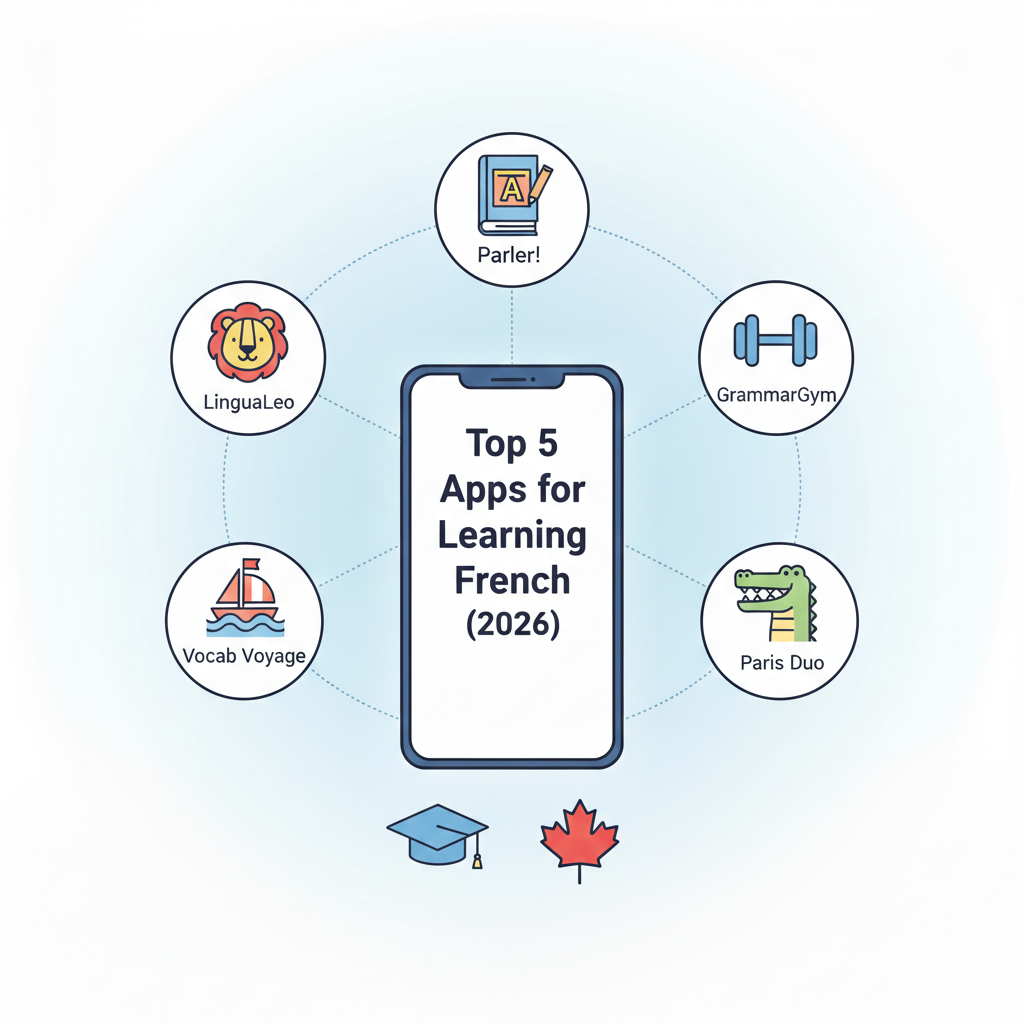
  • Top 5 French Learning Apps to Explore in 2026: Enhance Your Language Skills

    Top 5 French Learning Apps to Explore in 2026: Enhance Your Language Skills

    In today’s fast-paced world, mobile learning has become one of the most practical ways to start or improve a new language—and French is no exception. Whether you are learning French for travel, career growth, studies, Canadian immigration, or personal enrichment, the right app can make your learning routine more consistent and enjoyable.

    But with so many options available, choosing the best French learning app in 2026 can feel overwhelming. Some apps are excellent for building daily habits and vocabulary, while others are better for speaking practice, grammar structure, or audio-based learning.

    The truth is: there is no single “perfect” app for everyone. The best choice depends on your goal, learning style, budget, and current level.

    In this guide, we compare 5 popular French learning apps and explain what each one does well, where it may fall short, and how to choose the right one for your learning journey. We’ll also show why combining apps with a structured program like PrepFrench Classes can help you make faster and more reliable progress.

    In this article, you’ll find:

    • A practical comparison of the top 5 French apps in 2026
    • Strengths and limitations of each app
    • Pricing model overview (without outdated fixed numbers)
    • Who each app is best for
    • A smarter strategy: apps + structured French learning

    Using apps but not seeing enough speaking or grammar progress?

    Book a FREE demo class / consultation with PrepFrench Classes and get a personalized plan that combines app practice with structured lessons.

    Book Free Demo

    Why French Learning Apps Continue to Grow in 2026

    French learning apps are popular because they solve a major problem: consistency. Many learners struggle not because they lack ability, but because they cannot maintain a regular study routine. Mobile apps make it easier to practice in small pockets of time—during commutes, breaks, or before bed.

    Compared with traditional study-only approaches, apps often offer:

    • Short lessons that fit busy schedules
    • Gamified practice for motivation and habit building
    • Audio and pronunciation tools for listening/speaking support
    • Progress tracking that keeps learners accountable
    • On-demand access from phone, tablet, or desktop

    However, apps also have limitations. Many users become great at tapping answers but still struggle with real conversation, grammar accuracy, or structured writing. That is why the strongest learning strategy is often a hybrid approach: app-based practice for daily repetition + structured teaching for depth and correction.

    If you want a clear progression beyond app-only learning, explore our complete programs on the PrepFrench Courses Page.

    How We Chose These Top 5 French Learning Apps

    There are many good language apps, but this list focuses on platforms that are widely used and offer strong French-learning value for different types of learners. We selected apps based on:

    • French course availability and usability
    • Learning approach (gamified, conversational, immersive, audio-based, community-driven)
    • Beginner-friendliness
    • Skill coverage (reading, listening, speaking, writing/grammar support)
    • Habit-building and engagement

    We also recommend checking whether the app’s lesson structure aligns with the CEFR (Common European Framework of Reference for Languages), especially if you want measurable progress from beginner to intermediate levels.

    Top 5 French Learning Apps to Explore in 2026

    1) Duolingo — Best for Daily Habit Building and Beginner Motivation

    Duolingo remains one of the most recognized language learning apps in the world, and it is especially popular among beginners because of its playful design, daily streak system, and short lessons.

    What Duolingo does well

    • Excellent for building a daily study habit
    • Gamified lessons that keep beginners engaged
    • Covers core beginner topics through short exercises
    • Convenient for quick practice sessions throughout the day

    Where Duolingo may feel limited

    • Can feel repetitive for some learners after the beginner phase
    • Limited depth in advanced grammar explanation compared with structured classes
    • Speaking confidence in real conversation often needs additional practice outside the app

    Best for: Absolute beginners, casual learners, and anyone trying to build a consistent French habit.

    Official links: Duolingo Website | Super Duolingo (Premium Features)

    2) Babbel — Best for Structured Conversation-Oriented Learning

    Babbel is often preferred by learners who want a more structured path than gamified apps. Its lessons are designed to focus on practical phrases, grammar support, and real-life communication.

    What Babbel does well

    • More organized lesson progression than many casual apps
    • Strong focus on useful phrases and everyday communication
    • Good balance of vocabulary, grammar, and pronunciation support
    • Helpful for learners who want more direction than “game-style” learning

    Where Babbel may feel limited

    • Paid access may be a barrier for learners looking only for free tools
    • Still not a full replacement for live speaking correction and deeper writing practice

    Best for: Beginners to lower-intermediate learners who want a structured app and practical communication focus.

    Official links: Babbel Website | Babbel Pricing

    3) Rosetta Stone — Best for Immersive, Translation-Light Learning

    Rosetta Stone is known for its immersive approach, where learners are encouraged to understand meaning through context rather than direct translation. This method can help some learners build stronger intuitive comprehension over time.

    What Rosetta Stone does well

    • Immersive learning style that encourages thinking in French
    • Strong emphasis on listening and pronunciation practice
    • Useful for learners who prefer visual/contextual learning rather than constant translation

    Where Rosetta Stone may feel limited

    • Some beginners prefer clearer grammar explanations than the platform provides
    • Can feel less intuitive if you want explicit rule-by-rule teaching

    Best for: Learners who enjoy immersive, context-based learning and want pronunciation-focused practice.

    Official links: Rosetta Stone Website | Rosetta Stone Plans / Buy Page

    4) Pimsleur — Best for Audio-Based Speaking and Listening Practice

    Pimsleur is especially strong for learners who want to improve listening and speaking confidence through audio-first lessons. It is often a favorite among commuters or people who prefer learning by listening rather than screen-heavy study.

    What Pimsleur does well

    • Excellent for pronunciation, listening, and speaking rhythm
    • Great for learners who can study while walking, commuting, or multitasking
    • Encourages active response rather than passive listening

    Where Pimsleur may feel limited

    • Less writing/reading depth compared with some other platforms
    • Can feel expensive for learners who want a wider feature set for the same budget

    Best for: Auditory learners, busy professionals, and anyone wanting stronger French speaking/listening habits.

    Official links: Pimsleur French | Pimsleur Main Site

    5) Busuu — Best for Community Feedback and Balanced Skill Practice

    Busuu stands out for combining structured lessons with a community element where learners can interact and receive feedback. For many users, this makes language learning feel more social and practical.

    What Busuu does well

    • Offers a more structured feel than purely gamified apps
    • Community support can add practical motivation and feedback
    • Useful balance of vocabulary, grammar, speaking, and reading practice
    • Good option for learners who want app convenience + more “real-world” feel

    Where Busuu may feel limited

    • Community feedback quality can vary depending on activity and responses
    • Like most apps, it still benefits from teacher-led correction and deeper speaking practice

    Best for: Learners who want structured app learning with some community interaction and feedback.

    Official links: Busuu Website | Busuu Premium / Plans

    Want the best of both worlds: app convenience + real teacher support?

    Use apps for daily practice, and build real fluency with PrepFrench structured courses for grammar, pronunciation correction, and speaking confidence.

    Explore Courses

    Quick Comparison: Which French Learning App Is Best for You?

    App Best For Main Strength Main Limitation Pricing Style
    Duolingo Beginners & habit-building Gamified daily practice Limited depth for advanced grammar/speaking Free + premium upgrade
    Babbel Structured learners Conversation-oriented lessons Less attractive if you want only free tools Subscription plans
    Rosetta Stone Immersive learners Context-based learning and pronunciation Less explicit grammar explanation Subscription / plan-based
    Pimsleur Auditory learners / speaking practice Audio-first speaking + listening Less balanced for reading/writing depth Subscription plans
    Busuu Balanced learners + community interaction Structured lessons + community feedback Feedback consistency varies Free + premium upgrade

    Important note on pricing: app prices and features can change frequently depending on your country, device, promotions, and subscription length. Always check the official product/pricing pages linked above before deciding.

    Can a French Learning App Alone Make You Fluent?

    A French learning app can absolutely help you make progress—especially in vocabulary, repetition, listening familiarity, and daily practice. But for most learners, app-only study is usually not enough for full fluency.

    Why? Because fluency requires more than recognition. It requires:

    • Real speaking practice with correction
    • Grammar accuracy in open-ended communication
    • Listening comprehension across accents and natural speed
    • Confidence in conversations, not just app exercises
    • Structured progression from beginner to intermediate and beyond

    This is especially important if your goal includes:

    • Professional communication in French
    • Academic performance
    • Exam preparation (such as TEF Canada or TCF Canada)
    • Canadian immigration-related French goals

    If that sounds like you, consider using an app as a support tool rather than your entire learning strategy.

    The Smartest Strategy in 2026: Combine Apps with Structured French Classes

    Instead of asking “Which app is best?”, a better question is: How can I combine the right app with the right learning structure?

    Here’s a highly effective approach:

    Learning Goal What Apps Can Do What Structured Classes Add
    Daily consistency Short lessons, streaks, reminders Weekly accountability and real milestones
    Vocabulary growth Repetition and flashcard-style review Context, usage, speaking application
    Pronunciation & listening Audio practice and repetition Personal correction and clarity training
    Speaking confidence Basic prompts and repetition Live conversation practice + feedback
    Exam / goal-oriented progress Supplemental practice Targeted strategy, mocks, structured preparation

    At PrepFrench Classes, we encourage learners to use apps intelligently—without relying on them for everything. Our classes help fill the gaps apps often leave behind: grammar clarity, speaking confidence, pronunciation correction, and personalized guidance.

    If your long-term goal includes French exams or immigration preparation, we also offer focused pathways such as: Full TCF Canada (CLB 7) and Full TEF Canada (CLB 7).

    Ready to Learn French Faster Than App-Only Learners?

    Apps are great for daily practice—but real progress becomes much faster when you combine them with live guidance, structured lessons, and speaking correction. Book a FREE demo class / consultation and get a personalized plan from PrepFrench Classes.

    👉 Book Your Free Demo / Consultation

    Explore: All Courses  |  Full TCF Canada Course  |  Full TEF Canada Course  |  Home

    How to Choose the Right French Learning App for Your Needs

    If you are still unsure which app to use, start with these four questions:

    1) What is your primary goal?

    If your goal is a daily habit, Duolingo may work well. If you want structured lessons, Babbel or Busuu might fit better. If you want audio-heavy speaking practice, Pimsleur is strong. If you prefer immersive learning, Rosetta Stone may suit you.

    2) What is your learning style?

    Visual learners often like structured on-screen lessons, while auditory learners usually benefit from Pimsleur-style audio repetition. Some learners stay motivated only when there is gamification and progress tracking.

    3) What is your budget and commitment level?

    Many apps offer a free version or trial, but premium features may be needed for deeper progress. Compare value based on your use frequency—not just the monthly price.

    4) Do you need real speaking correction?

    If yes, do not rely on apps alone. Add a structured class where you can practice speaking and receive personalized feedback.

    If you want help choosing the best learning path (app + course combo), contact us here: PrepFrench Contact Page.

    Frequently Asked Questions (FAQ)

    1) What is the best French learning app in 2026?

    It depends on your goal. Duolingo is excellent for habit-building, Babbel for structured lessons, Rosetta Stone for immersion, Pimsleur for audio-based speaking/listening, and Busuu for structured learning with community support.

    2) Can I become fluent in French using only an app?

    Apps can help a lot, especially with vocabulary, repetition, and listening exposure. However, most learners need additional speaking practice, grammar guidance, and real feedback to reach strong conversational fluency.

    3) Which French app is best for beginners?

    Many beginners start with Duolingo because it is easy to use and motivating. Learners who want more structure often prefer Babbel or Busuu. The best app is the one you can use consistently.

    4) Which app is best for speaking and listening practice?

    Pimsleur is often a strong choice for speaking and listening because of its audio-first approach. Still, live speaking practice with a teacher or class is highly recommended for real confidence and correction.

    5) Should I use an app or join French classes?

    The most effective approach is usually both: use an app for daily practice and a structured class for grammar clarity, speaking practice, pronunciation correction, and long-term progression.

    Final Thoughts

    French learning apps in 2026 offer more flexibility and variety than ever before. Whether you choose Duolingo, Babbel, Rosetta Stone, Pimsleur, or Busuu, the key is to select the app that matches your goals—and use it consistently.

    But if you want to move beyond app exercises and build real French communication skills, combine your app practice with structured learning and expert support.

    At PrepFrench Classes, we help learners turn daily practice into real progress through guided courses, speaking support, and goal-based learning pathways.

    ✅ Next Step: Book Your FREE Demo / Consultation


    Disclaimer: App features, pricing, trial policies, and subscription plans may change by region and over time. Please verify current details on the official websites before purchasing.

  • Overcoming Common Challenges in Learning French: A Complete Guide

    Overcoming Common Challenges in Learning French: A Complete Guide

    Learning French for the first time can feel exciting, inspiring, and sometimes overwhelming. Many beginners start with strong motivation, but soon run into common obstacles such as French pronunciation challenges, confusing grammar rules, slow vocabulary retention, and lack of speaking confidence.

    The good news is that these struggles are completely normal. In fact, most beginners face the same problems in the early stages of learning. What makes the difference is not whether challenges appear, but how you respond to them.

    In this beginner-friendly guide, we will break down the most common challenges in learning French and show you practical ways to overcome them. Whether you are learning French for personal growth, studies, work, travel, or Canadian immigration goals, this article will help you build a stronger foundation.

    At PrepFrench Classes, we work with beginners every day and help them move from confusion to confidence through structured lessons, guided practice, and personalized feedback.

    In this guide, you will learn how to overcome challenges in:

    • French pronunciation (nasal sounds, silent letters, liaisons)
    • French grammar (verbs, gender, sentence structure)
    • French vocabulary acquisition and retention
    • Listening and speaking confidence
    • Cultural understanding and real-life language use

    Starting French and not sure where to begin?

    Book a FREE demo class / consultation with PrepFrench Classes and get a personalized beginner roadmap based on your goals.

    Book Free Demo

    Why Learning French Feels Difficult at First (and Why That’s Normal)

    One of the biggest mistakes beginners make is assuming they are “bad at languages” simply because French feels hard in the beginning. French is different from English in pronunciation, grammar, spelling, and rhythm, so your brain needs time to adapt.

    In the early stage, learners often experience:

    • Understanding a word while reading it, but not recognizing it when spoken
    • Knowing grammar rules in theory, but forgetting them while speaking
    • Learning vocabulary today and forgetting it a few days later
    • Feeling nervous when trying to speak out loud

    These are not signs of failure. They are signs that your language system is being built. The key is to use the right strategy early on, instead of relying only on memorization or random practice.

    A structured path matters. If you are looking for guided beginner-to-advanced progression, you can explore all options on our Courses Page.

    1) Tackling Common French Pronunciation Challenges

    Pronunciation is one of the first major difficulties in learning French for beginners. Many words do not sound the way they look, and French contains sounds that may not exist in your native language.

    Common Pronunciation Problems Beginners Face

    1. Nasal vowels
    French includes nasal sounds (such as in pain, bon, un) that are produced through both the nose and mouth. Beginners often pronounce them like regular vowels, which changes the sound and sometimes the meaning.

    2. Silent letters
    Many French words contain letters that are not pronounced, especially at the end of words. For example, the final consonants in many everyday words may be silent. This can make reading and pronunciation feel disconnected.

    3. Liaisons and connected speech
    In French, words are often linked together in speech. This is one reason native speakers sound fast to beginners. Learners may know each individual word, but fail to understand the spoken phrase when words connect.

    4. The French “R” sound
    The French “R” is often challenging for English speakers and many other learners. It requires mouth and throat positioning that may feel unnatural at first.

    5. Rhythm and intonation
    French has a distinct rhythm, and speaking with English intonation can make sentences sound unnatural even if the words are correct.

    How to Improve French Pronunciation as a Beginner

    • Listen daily to native French audio (short clips are enough at first)
    • Repeat aloud instead of only listening silently
    • Practice minimal pairs to hear sound differences
    • Record yourself and compare your speech with native audio
    • Learn pronunciation rules gradually instead of trying to master everything in one week

    A powerful beginner technique is shadowing: listen to a short phrase and repeat it immediately, copying the sound, rhythm, and intonation. This builds pronunciation, listening, and speaking confidence together.

    At PrepFrench Classes, we include guided pronunciation support early in the learning journey so students can build strong speaking habits from day one, instead of correcting the same errors much later.

    2) Navigating French Grammar Without Feeling Overwhelmed

    French grammar can seem complex at first, especially for beginners who are used to English sentence patterns. The important thing is to remember that you do not need to master all French grammar at once.

    Most learners struggle not because grammar is impossible, but because they try to learn too many rules too quickly without enough guided practice.

    Most Common French Grammar Challenges for Beginners

    1. Verb conjugation
    In French, verbs change depending on the subject, tense, and mood. Even common verbs like être, avoir, and aller are highly important and frequently used. Beginners often understand the infinitive but get confused when verbs change form in real sentences.

    2. Gendered nouns (masculine/feminine)
    Unlike English, French nouns are masculine or feminine, and this affects articles and adjective agreement. Learners often memorize the noun but forget its gender, which leads to repeated mistakes in speaking and writing.

    3. Articles and agreement
    French articles and adjectives must agree in gender and number. This adds extra decisions while forming even simple sentences.

    4. Sentence structure and pronouns
    Word order can feel different, especially when using object pronouns or negation. Beginners may know what they want to say but struggle to arrange the words correctly.

    5. Tenses and usage
    Learners often ask: “Which tense should I use?” The issue is usually not only memorizing forms, but also understanding when and why a tense is used.

    How to Learn French Grammar More Effectively

    • Learn grammar in layers (present tense first, then expand)
    • Study grammar with examples, not just rules
    • Practice one concept at a time in speaking and writing
    • Review frequently instead of studying a topic once and moving on
    • Get feedback so errors do not become habits

    A common beginner mistake is trying to sound advanced too early. It is much better to produce simple, correct sentences consistently than complicated sentences full of grammar errors.

    If you want a structured grammar progression (A1, A2, B1, B2) rather than random internet content, see our full learning path on the PrepFrench Courses page.

    3) Mastering French Vocabulary Acquisition (Without Forgetting Everything)

    Vocabulary is essential for communication, but beginners often feel frustrated because they learn new words and then forget them quickly. This happens when vocabulary is learned in isolation instead of through repetition and context.

    Why Vocabulary Feels Hard to Retain

    • Trying to memorize long random word lists
    • Not reviewing words after the first day
    • Learning translation only (without examples)
    • Not using the new words in speaking or writing
    • Studying too many words at once

    Beginners also struggle with false friends (words that look familiar but have different meanings) and with choosing the correct word in context. This is why context-based learning is much more effective than rote memorization.

    Best Ways to Build French Vocabulary as a Beginner

    1. Use spaced repetition
    Tools like flashcards (digital or paper) work best when words are reviewed repeatedly over time. The goal is not to “study once,” but to revisit words before you forget them.

    2. Learn words in themes
    Group vocabulary by topic (family, food, travel, daily routine, emotions, work). This helps your brain create stronger connections.

    3. Learn words in phrases, not alone
    Instead of learning only one word, learn how it is used in a short sentence. This improves memory and helps you speak more naturally.

    4. Use active recall
    Test yourself before checking the answer. Struggling to remember is part of the learning process and strengthens long-term memory.

    5. Use your new vocabulary immediately
    Write short sentences, say them out loud, or use them in class conversation. Words become stronger when they move from recognition to usage.

    At PrepFrench, we use guided vocabulary practice, topic-based activities, and conversation tasks so students can retain and use what they learn, rather than just recognizing it passively.

    Want a structured French learning system instead of random apps?

    Explore our French courses for beginners and exam-focused learners. We cover grammar, vocabulary, speaking, pronunciation, and real practice in one guided path.

    View All Courses

    4) Improving French Listening Comprehension (A Common Beginner Frustration)

    Many beginners say, “I can read some French, but I can’t understand native speakers.” This is one of the most common challenges in learning French, and it is completely normal.

    Listening feels difficult because real spoken French includes:

    • Fast speech
    • Connected words (liaisons and natural flow)
    • Informal pronunciation
    • Everyday expressions not found in textbook sentences

    Beginners often make the mistake of listening only to content that is too difficult. If the audio is far above your level, it becomes discouraging and your brain cannot process enough repeated patterns.

    How to Improve French Listening Step by Step

    • Start with slow, level-appropriate audio
    • Listen to short clips multiple times instead of long clips once
    • Use transcripts when possible to connect sound and spelling
    • Repeat key phrases aloud (listening + speaking together)
    • Build a daily habit (10–20 minutes consistently works better than occasional long sessions)

    Listening improves through repeated exposure. If you keep hearing the same structures and vocabulary in real context, your brain gradually begins to decode them faster.

    5) Building Speaking Confidence and Overcoming Fear of Mistakes

    One of the biggest emotional barriers for beginners is speaking anxiety. Many learners wait too long before speaking because they want to be “perfect” first. Unfortunately, this slows progress.

    French speaking confidence grows through practice, not through silent study alone. You do not need perfect grammar to start speaking. You need a safe environment where mistakes are part of the learning process.

    Why Beginners Hesitate to Speak French

    • Fear of mispronouncing words
    • Fear of grammar mistakes
    • Low confidence in vocabulary recall
    • Comparing themselves to advanced learners
    • Not having regular speaking opportunities

    How to Speak French More Confidently (Even as a Beginner)

    • Start with short, repeatable phrases used in daily life
    • Practice speaking from day one, even for 2–5 minutes
    • Use sentence frames (e.g., “I like…”, “I need…”, “I want to…”) to build fluency
    • Record voice notes and track improvement over time
    • Practice in a supportive class environment where correction is constructive

    A powerful mindset shift is this: mistakes are evidence of active learning. If you are making mistakes while speaking, it means you are practicing the real skill that leads to fluency.

    Our classes at PrepFrench Classes focus on helping learners speak early and often, with guided correction so confidence improves alongside accuracy.

    6) Understanding French Culture and Real-Life Language Use

    Learning French is not only about grammar and vocabulary. Language also includes tone, politeness, expressions, and cultural context. Beginners who ignore cultural usage may create grammatically correct sentences that still sound unnatural.

    Common Cultural/Usage Challenges for Beginners

    1. Formal vs informal language (tu / vous)
    Knowing when to use formal or informal speech is an important part of communication and social context.

    2. Expressions that don’t translate directly
    Many French phrases make sense only when understood in context. Translating word-for-word often causes confusion.

    3. Communication style and politeness
    Everyday phrases for greeting, thanking, requesting, and apologizing matter a lot in real conversations.

    4. Tone and register
    The way you speak in a casual conversation can differ from the way you write an email or speak in a professional setting.

    How to Build Cultural Understanding While Learning French

    • Watch French content with attention to how people greet and respond
    • Learn common expressions in real situations, not just isolated lists
    • Practice role-plays (introductions, requests, shopping, appointments)
    • Ask your teacher not only “What does this mean?” but also “When do people say this?”

    Cultural understanding makes your French more natural and helps you communicate with greater confidence and respect in real-life situations.

    7) Staying Motivated While Learning French (A Hidden Challenge)

    Motivation is often strongest at the beginning and then drops when progress feels slow. This is normal. Language learning is a long-term process, and visible progress does not always happen in a straight line.

    Many students quit not because they lack ability, but because they lose momentum. The solution is to build systems that make consistency easier.

    Practical Ways to Stay Motivated

    • Set small goals (e.g., learn 10 words, complete one listening exercise, speak for 3 minutes)
    • Track progress weekly so you can see improvement over time
    • Celebrate small wins (first conversation, first paragraph, first successful listening task)
    • Use enjoyable content (music, stories, podcasts, videos)
    • Study with structure instead of guessing what to do each day

    Motivation becomes more sustainable when your study plan is realistic and your learning environment is supportive.

    A Practical Weekly Study Plan for Beginner French Learners

    If you are wondering how to apply all of this, here is a simple weekly structure that balances pronunciation, grammar, vocabulary, listening, and speaking:

    Day Focus Area Suggested Activity
    Monday Pronunciation + Listening Short audio + repeat aloud + sound drills
    Tuesday Grammar One grammar topic + example sentences
    Wednesday Vocabulary Theme-based vocabulary + flashcard review
    Thursday Speaking Guided speaking prompts / self-recording
    Friday Reading + Review Short text + review grammar/vocab from the week
    Weekend Light Immersion French music, film clips, or simple content for enjoyment

    Even 30–60 minutes a day can produce strong progress if your study plan is consistent and balanced.

    How PrepFrench Classes Helps Beginners Overcome These Challenges

    At PrepFrench Classes, we know that beginners need more than random lessons. They need a clear learning path, regular feedback, and a supportive environment where mistakes become progress.

    Our approach is designed to help students overcome the exact challenges discussed in this article:

    • Pronunciation support with guided correction
    • Structured grammar progression from beginner to higher levels
    • Vocabulary building in context through practice and usage
    • Speaking confidence training with real interaction
    • Motivation through organized classes and feedback

    If your long-term goal includes Canadian immigration, we also offer focused exam preparation pathways, including: Full TCF Canada (CLB 7) Course and Full TEF Canada (CLB 7) Course.

    Ready to Start Learning French with Confidence?

    Don’t let pronunciation, grammar, or fear of mistakes slow you down. With the right guidance and a structured plan, French becomes much easier and more enjoyable. Book a FREE demo class / consultation and let us help you create your personalized beginner roadmap.

    👉 Contact PrepFrench Classes to Book Your Free Demo

    Explore: All Courses  |  Full TCF Canada Course  |  Full TEF Canada Course

    Frequently Asked Questions (FAQs)

    1) What are the most common challenges in learning French for beginners?

    The most common challenges include pronunciation, grammar, vocabulary retention, listening comprehension, and speaking confidence. These are normal beginner-stage difficulties and can be improved with structured practice.

    2) How can I improve my French pronunciation quickly?

    Focus on daily listening, repetition, shadowing, and speaking aloud. It is also very helpful to get correction from a teacher so pronunciation mistakes do not become habits.

    3) Why do I forget French vocabulary so fast?

    Vocabulary is often forgotten when it is memorized only once or learned without context. Use spaced repetition, topic-based lists, and real sentences to improve long-term retention.

    4) How long does it take to learn beginner French?

    It depends on your consistency, study method, and goals. With a structured plan and regular practice, beginners can build a strong foundation within a few months and continue progressing steadily.

    5) How can I stay motivated while learning French?

    Set small goals, track your progress, use enjoyable French content, and learn in a structured environment. A class with guidance and support can make a big difference in staying consistent.

    Final Thoughts

    Learning French as a beginner comes with real challenges—but every one of them can be overcome with the right strategy, patience, and support. Pronunciation improves with repetition, grammar becomes manageable when learned step by step, vocabulary grows through review and usage, and confidence increases every time you speak.

    The key is not perfection. The key is consistent, guided progress.

    If you want to learn French with a structured roadmap and supportive coaching, start with a free consultation at PrepFrenchClass.com.

    ✅ Next Step: Book Your FREE Demo / Consultation


    Note: This guide is for educational purposes and general beginner support. For a personalized learning plan, course recommendation, or exam-prep pathway, contact PrepFrench Classes directly.