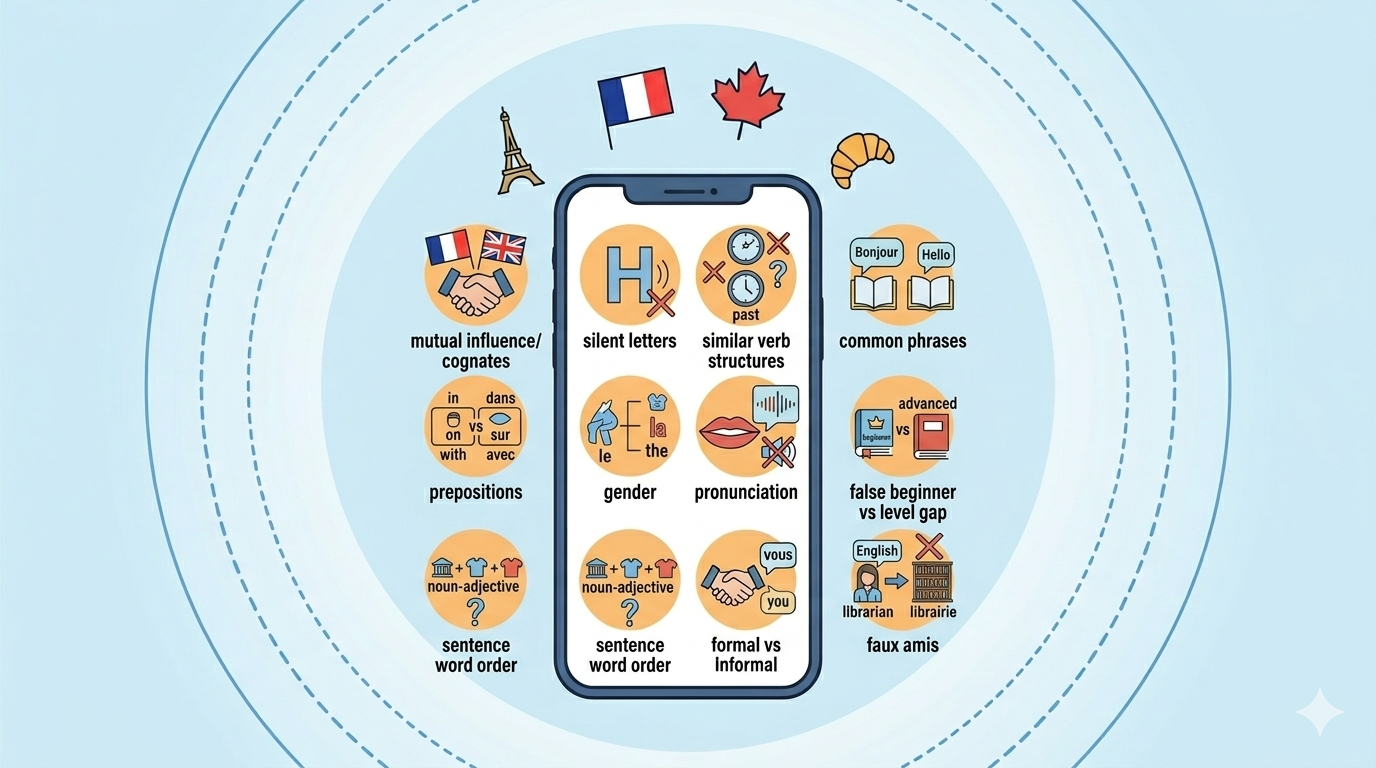
Learning French can feel much easier once you understand how closely connected English and French actually are. These two languages share centuries of historical interaction, thousands of similar words, and many cultural influences. At the same time, they differ in grammar, pronunciation, and communication style.
For English speakers, recognizing these similarities and differences is one of the most powerful ways to accelerate language progress. In this comprehensive guide, we will explore how English and French evolved together, where they overlap, and where learners must adapt their thinking to truly master French.
If you are starting your language journey, structured programs such as those available through PrepFrench Classes can help you understand these patterns more quickly and avoid common beginner mistakes.
Table of Contents
- Historical Connections Between English and French
- Vocabulary Similarities and Cognates
- Major Grammar Differences
- Pronunciation Differences
- Cultural Influences in Language
- Practical Tips for English Speakers Learning French
- FAQ
Historical Connections Between English and French
Understanding the historical relationship between English and French provides valuable insight when learning French. One of the most influential events shaping both languages was the Norman Conquest of England in 1066.
After the conquest, French became the language of the English aristocracy and administration for several centuries. As a result, thousands of French words entered English vocabulary.
Today, linguists estimate that roughly 30% of English vocabulary originates from French. Words related to law, governance, cuisine, and art frequently come from French origins.
For deeper linguistic research on language development and frameworks, you can explore resources from the official CEFR language framework.
During the Renaissance and later global expansion, English also influenced French in return. This mutual exchange means modern learners often recognize familiar patterns across both languages.
Want Structured Guidance for Learning French?
Our instructors help students understand grammar, vocabulary, and pronunciation step-by-step.
Book Free DemoExplore Courses
Vocabulary Similarities That Make Learning French Easier
One of the biggest advantages English speakers have when learning French is the presence of cognates. Cognates are words that look similar and share similar meanings in both languages.
Examples include:
| English | French | Meaning |
|---|---|---|
| Restaurant | Restaurant | Dining place |
| Artist | Artiste | Creative professional |
| Justice | Justice | Legal fairness |
| Culture | Culture | Societal traditions |
These shared words help learners quickly build vocabulary confidence. However, it is important to watch for false friends — words that appear similar but carry different meanings.
For example:
- Actuellement means “currently”, not “actually”.
- Library translates to bibliothèque, not librairie.
Understanding these distinctions is essential for effective communication while learning French.
Grammar Differences Between English and French
Despite vocabulary similarities, grammar differences can challenge English speakers when learning French. These differences require careful practice and exposure.
Gendered Nouns
Unlike English, French nouns are assigned grammatical gender.
Examples:
- le livre (the book – masculine)
- la table (the table – feminine)
Adjectives and articles must agree with the noun’s gender, which adds an extra layer of complexity.
Verb Conjugation
French verbs change depending on the subject and tense. For example:
- Je parle
- Tu parles
- Nous parlons
English verbs change less frequently, which is why conjugation may feel unfamiliar to new learners.
Official explanations of language proficiency standards can be explored through resources such as France Éducation International.
Pronunciation Differences When Learning French
Pronunciation is one of the biggest hurdles when learning French. French includes several sounds that do not exist in English.
Common pronunciation challenges include:
- Nasal vowels (an, on, in)
- The French “r” sound
- Silent final consonants
- Liaison between words
Listening practice is essential. Educational research published through organizations such as OECD education studies emphasizes the importance of audio exposure when acquiring new languages.
Consistent listening to native speech gradually trains your ear to identify these subtle sound differences.
Improve Your Pronunciation with Expert Guidance
Practice speaking with instructors who correct pronunciation and build confidence.
Book Free DemoTCF Preparation | TEF Preparation
Cultural Differences Reflected in Language
Language reflects cultural values. When learning French, understanding cultural norms can help you communicate more naturally.
One important example is the distinction between:
- Tu – informal “you”
- Vous – formal or plural “you”
Using the wrong form can sometimes sound impolite. French culture tends to place strong emphasis on politeness and formality.
Global cultural research conducted by institutions such as UNESCO cultural initiatives highlights how language structures often mirror societal values.
By understanding cultural context, learners develop not only linguistic accuracy but also social awareness.
Practical Tips for English Speakers Learning French
To accelerate progress while learning French, consider these proven strategies:
- Practice speaking daily
- Watch French films or listen to podcasts
- Learn phrases instead of isolated words
- Review vocabulary consistently
- Join structured language classes
If your goal includes official certification or immigration pathways, structured preparation programs can significantly improve success rates.
Explore training options through professional language programs designed for beginners and advanced learners.
Conclusion
Understanding the similarities and differences between English and French provides a powerful advantage when learning French. Shared vocabulary makes the language accessible, while grammar and pronunciation differences present stimulating challenges.
With consistent practice, cultural awareness, and the right learning environment, English speakers can achieve fluency far more efficiently than they might expect.
The key is to stay curious, practice regularly, and embrace both the similarities and the differences that make the French language so fascinating.
Start Your French Learning Journey Today
Join live online classes, structured lessons, and expert guidance.
Book Free DemoFrequently Asked Questions
What makes French easier for English speakers?
Thousands of shared vocabulary words and historical connections make French more accessible to English speakers than many other languages.
What is the biggest grammar difference between English and French?
The system of gendered nouns and verb conjugations are two of the biggest grammar differences.
Is French pronunciation difficult?
French pronunciation includes nasal vowels and silent letters that require practice but become easier with listening exposure.
How long does it take to learn French?
With consistent study and practice, conversational proficiency often develops within 12–24 months.
Can I learn French online?
Yes. Online classes, speaking practice, and multimedia resources allow learners to develop strong language skills from anywhere.
Leave a Reply