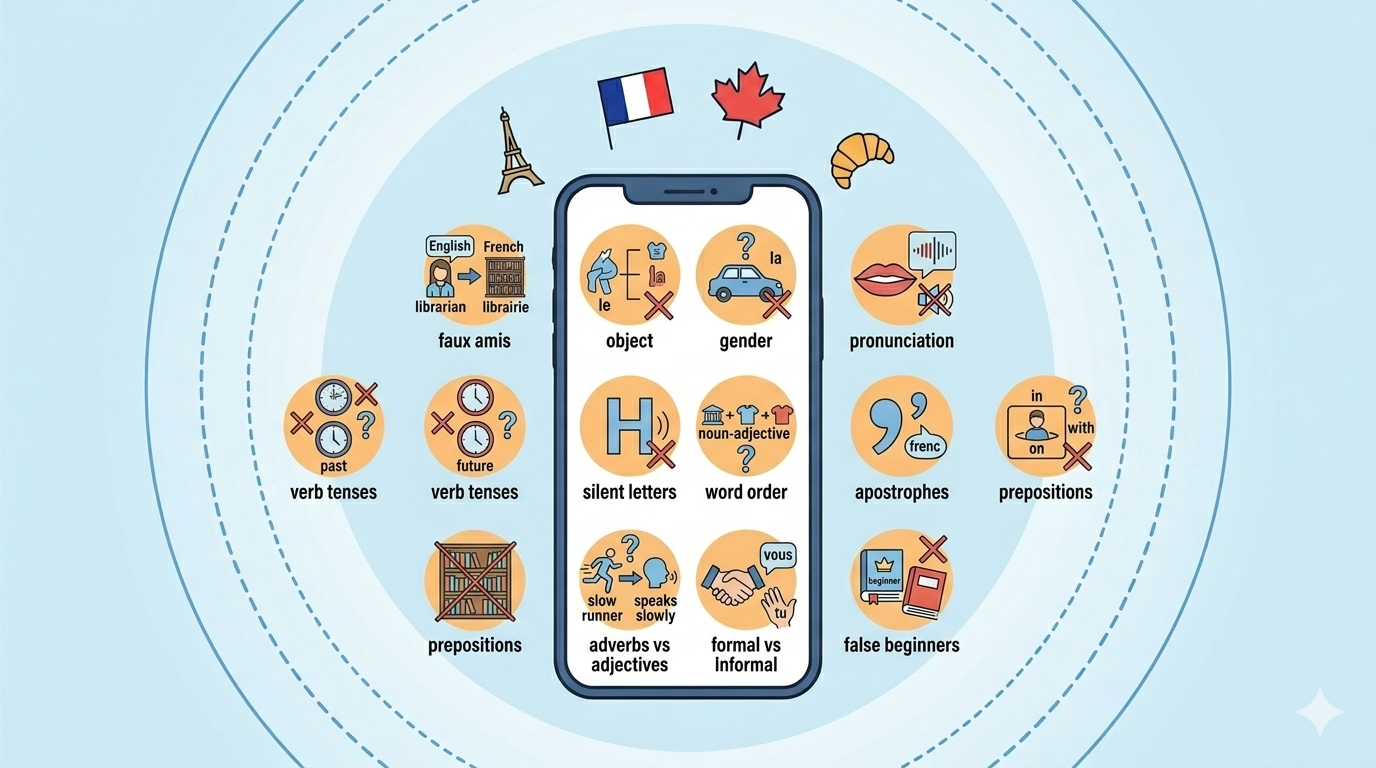
Learning French is one of the most rewarding intellectual and cultural journeys you can begin. Whether your goal is travel, immigration, career advancement, or simply personal enrichment, French opens doors to a global community of more than 300 million speakers. Yet despite its beauty, many learners struggle because they unknowingly repeat the same mistakes during the early stages of study.
By understanding these challenges in advance, you can accelerate your progress and develop a more natural command of the language. In this guide, we will explore 11 of the most common mistakes learners make when studying French and provide practical strategies to overcome them. If you are serious about building real fluency, avoiding these pitfalls can dramatically improve your results.
Table of Contents
- Why Learning French Feels Challenging
- 11 Common Mistakes Learners Make
- How to Study French More Effectively
- Practical Tips for Faster Progress
- FAQ
Why Learning French Feels Challenging
Before discussing mistakes, it is helpful to understand why learning French can feel difficult for many students. French pronunciation, grammar structures, and verb conjugations differ significantly from English. For example, nasal vowels such as on, an, and in have no direct equivalent in English.
Additionally, French grammar includes gendered nouns, agreement rules, and multiple verb tenses. These features make the language intellectually rich but sometimes confusing for beginners.
According to the official CEFR language framework, mastering a new language requires developing competence in listening, reading, writing, and speaking simultaneously. Learners who focus too heavily on one skill often struggle with overall fluency.
Fortunately, once you recognize common learning pitfalls, you can adopt strategies that accelerate your progress and make the experience far more enjoyable.
Start Your French Journey the Right Way
Join structured lessons with experienced instructors and interactive exercises designed to build real fluency.
Book Free DemoTCF Preparation Program | TEF Preparation Program
11 Common Mistakes to Avoid When Learning French
1. Focusing Too Much on Grammar
One of the biggest mistakes people make when learning French is obsessing over grammar rules. Grammar is important, but language exists to communicate. If you constantly worry about making mistakes, you may avoid speaking altogether.
Instead, combine grammar study with conversation practice. Real communication helps reinforce grammatical structures naturally.
2. Ignoring Pronunciation Early
French pronunciation is extremely important. Small differences can completely change meaning. For instance, beaucoup and beau coup sound similar but differ in meaning.
Pronunciation practice using phonetic exercises is essential. Many learners benefit from listening to native audio resources provided by institutions such as France Éducation International.
3. Relying Only on Textbooks
Textbooks are helpful, but they rarely reflect natural conversation. Real language includes slang, idioms, and cultural context.
Supplement textbooks with French films, podcasts, and authentic materials. Listening to real speech improves comprehension significantly.
4. Avoiding Conversation Practice
Speaking is the most important skill when learning French, yet it is often neglected. Without conversation, vocabulary remains passive knowledge.
Practice regularly with tutors, language partners, or online conversation groups. Studies from the OECD education research show that interactive learning dramatically increases language retention.
5. Translating Everything in Your Head
Many learners mentally translate every sentence from English to French. This habit slows down speaking and makes conversations stressful.
Instead, try to think directly in French by associating words with images or actions rather than translations.
6. Ignoring Cultural Context
Language and culture are deeply connected. Understanding French culture helps you interpret expressions and communication styles.
Resources from organizations such as UNESCO cultural programs highlight how cultural exposure improves language learning outcomes.
7. Memorizing Without Context
Vocabulary lists alone rarely lead to fluency. Words are easier to remember when learned within sentences or stories.
For example, instead of memorizing manger, practice full sentences like: Je mange une pomme.
8. Skipping Listening Practice
Listening comprehension is essential when learning French. Native speech can initially sound fast and unclear.
Use podcasts, interviews, and educational videos to train your ear. Over time, patterns become easier to recognize.
9. Studying Inconsistently
Consistency matters more than intensity. Studying for 15 minutes daily is often more effective than several hours once a week.
Create a realistic study schedule that fits your lifestyle.
10. Not Setting Clear Goals
Clear objectives help maintain motivation. For example:
- Passing an official language exam
- Holding a 10-minute conversation
- Reading French articles comfortably
Official tests such as those explained on the CCI Paris official page measure language proficiency across multiple skills.
11. Trying to Learn Alone Without Guidance
While self-study is useful, structured instruction dramatically improves results. Teachers provide feedback, pronunciation correction, and accountability.
Professional programs available at PrepFrench Classes combine grammar, speaking practice, and exam preparation for a balanced learning experience.
Ready to Improve Your French Faster?
Our instructors help students avoid common mistakes and build real conversational fluency.
Book Free DemoView All Courses
Practical Tips for Learning French Faster
Avoiding mistakes is only part of the journey. Here are practical strategies that help accelerate progress while learning French.
| Strategy | Benefit |
|---|---|
| Daily listening practice | Improves comprehension and pronunciation |
| Speaking with tutors | Builds real communication confidence |
| Learning phrases instead of single words | Speeds up conversational fluency |
| Cultural immersion | Improves understanding of real-life communication |
Conclusion
Mastering a language requires patience, consistency, and the right strategy. By recognizing these common mistakes early, you can approach learning French with a smarter and more effective study plan.
Focus on balanced learning: combine grammar, pronunciation, listening, and conversation practice. Engage with authentic cultural content and maintain a regular study schedule.
With the right guidance and dedication, achieving French fluency is absolutely possible.
Start Speaking French with Confidence
Join live classes, structured lessons, and expert guidance designed for real-world fluency.
Book Free DemoFrequently Asked Questions
What is the biggest challenge when learning French?
Pronunciation and verb conjugation are often the biggest challenges, especially for beginners.
How long does it take to become fluent in French?
It depends on study intensity, but consistent learners often reach conversational fluency within 12–24 months.
What is the best way to practice speaking French?
Practice with tutors, conversation groups, or structured language classes.
Can I learn French without living in a French-speaking country?
Yes. Online lessons, media exposure, and speaking practice allow learners to develop strong fluency remotely.
Are official French exams necessary?
They are not required for everyone, but certifications can be helpful for immigration, university admission, or employment.
Leave a Reply